


They asked for my phone at the border. What now?
At many borders, an officer can make you unlock your phone, and saying no has real consequences. Here are your actual options, and the one most people don't know about.
You are in line. The officer takes your passport, then nods at your phone and says, "Unlock it, please."
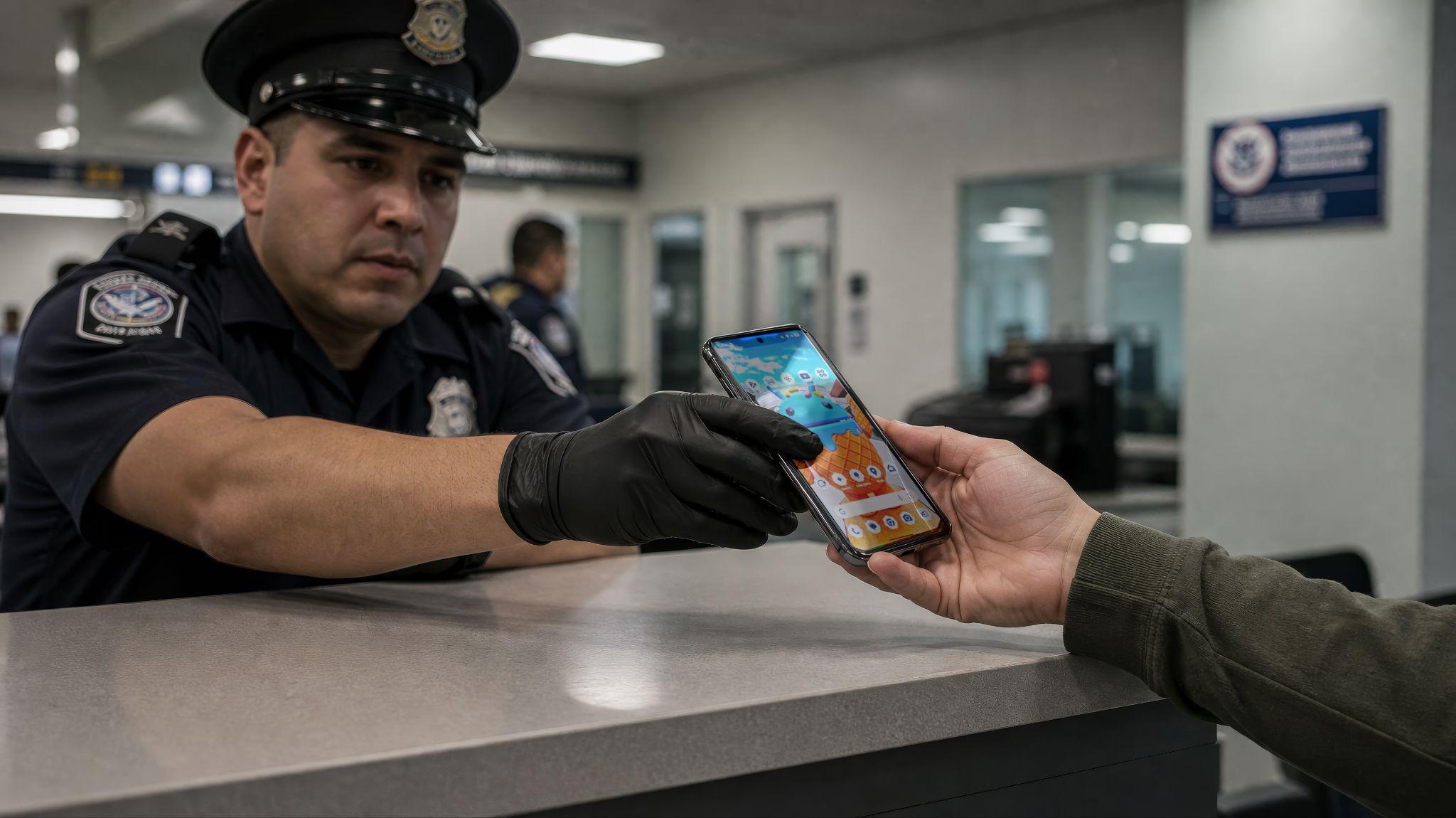
This is one of the few moments where the normal rules about your privacy quietly stop applying. And most people have no idea what their options actually are until they are standing there.
The border is a privacy blind spot
In the United States, officers can search your phone at the border without a warrant under the border search exception. It is not rare: US Customs and Border Protection ran a record number of device searches in 2025, more than 55,000, and the number keeps climbing.
device searches at the US border in 2025, and the number keeps climbing.
It is not just the US. The UK can legally compel you to hand over a password under its terrorism and surveillance laws, and refusing is itself a criminal offence. Plenty of other countries do the same in practice. So "I know my rights" is a weaker shield here than people assume.
Your options, and why each one hurts
Picture the moment. Here is what you can actually do, and the catch with each:
- Refuse. If you are not a citizen, refusal may result in denial of entry and return home. If you are a citizen, you usually cannot be denied entry, but your phone can be seized and held for weeks while it is copied and examined. Either way, you have just made yourself the most interesting person in the line.
- Show up with an empty or wiped phone. A blank phone at a border is a giant flag. It reads as "this person scrubbed their device before arriving," and it invites exactly the scrutiny you were trying to avoid.
- Carry a burner. Also suspicious if noticed, and you spend your whole trip without your real apps, messages, and tools.
- Just unlock it. The path of least resistance, but now a stranger is scrolling through your messages, photos, email, and accounts. One unlock, your whole life.
- Hit a panic button that wipes your data in front of them. Same problem as showing up wiped: a visible wipe under an officer's eyes makes it look like you had something to hide, and it can make the moment worse, not better.
Notice that every option is bad. You either look suspicious, lose your device, or expose everything. That is the trap.
The option most people do not know about
There is a fourth choice that does not appear on that list: hand over a phone that is genuinely complete and ordinary, where the part you want kept private is not visible at all.
Not a wiped phone. Not a burner. Not a dramatic wipe mid-search. A real, lived-in, fully working phone, with your everyday apps, photos, and history, so that "unlock it" produces a calm, boring result. You cooperate fully. There is simply nothing unusual to find.
That is what DeniableOS is built for. One phone, three PINs, one lock screen. The Public PIN opens your ordinary, lived-in phone. The Hidden PIN opens a separate environment whose data is stored in a way that it cannot be distinguished from unused space. And there is a Duress PIN for the worst case: enter it under pressure, and the phone opens straight into the normal public side, exactly as if you had cooperated, while the hidden environment is quietly erased in the background. To the officer watching, it is a normal unlock. There is no visible wipe, no drama, and no signal that anything else was ever there.
You hand over a complete device. They see a normal life. The private side is not something they can browse, demand, or even prove exists.
The honest part
This is about the routine border check and the everyday device search, the situation that almost every traveller actually faces. It is not a magic shield against a targeted investigation by people who already suspect you specifically and have had your device for weeks. A serious tool is worth more than a false promise, so it is important to be clear about that line.
But for the ordinary "unlock it, please" at a checkpoint, the goal is simple and reachable: be able to comply, calmly and completely, and still keep your private life private.
Comply fully. Reveal nothing.
Unlock a real, ordinary phone at the checkpoint, while the private side stays invisible and unprovable.
FAQ
Can they really make me unlock my phone?
At many borders, yes, in practice. In the US they can search it without a warrant; refusing can mean denied entry (non-citizens) or a seized device (citizens). Some countries make refusal a crime.
Isn't a wiped or empty phone safer?
Usually the opposite. An empty phone at a border looks like you cleaned it on purpose and tends to draw more attention, not less. That is also why a panic wipe in the moment is a bad idea: it reads the same way.
How does a hidden environment help here?
You unlock a real, normal phone, so cooperation looks completely natural, while the private side is not visible and cannot be browsed at the checkpoint.
What if I have to unlock under duress and cannot use the hidden PIN?
Use the duress PIN. The phone opens into the public side as a normal unlock, while the hidden environment is erased in the background. Compliance looks like compliance, not destruction.
Sources
- EFF, border device searches and your rights: eff.org
- US border device searches, record numbers and guidance: security.ucop.edu
- UK compelled password disclosure (RIPA): reeds.co.uk
More to read
Deniable vs Glacier: a managed secure phone, or one that survives a forced unlock?
Glacier hardens the phone and the network around it for enterprise teams. Deniable answers one moment neither hardening nor encryption covers: someone standing in front of you, making you unlock. Here is which problem each one solves.
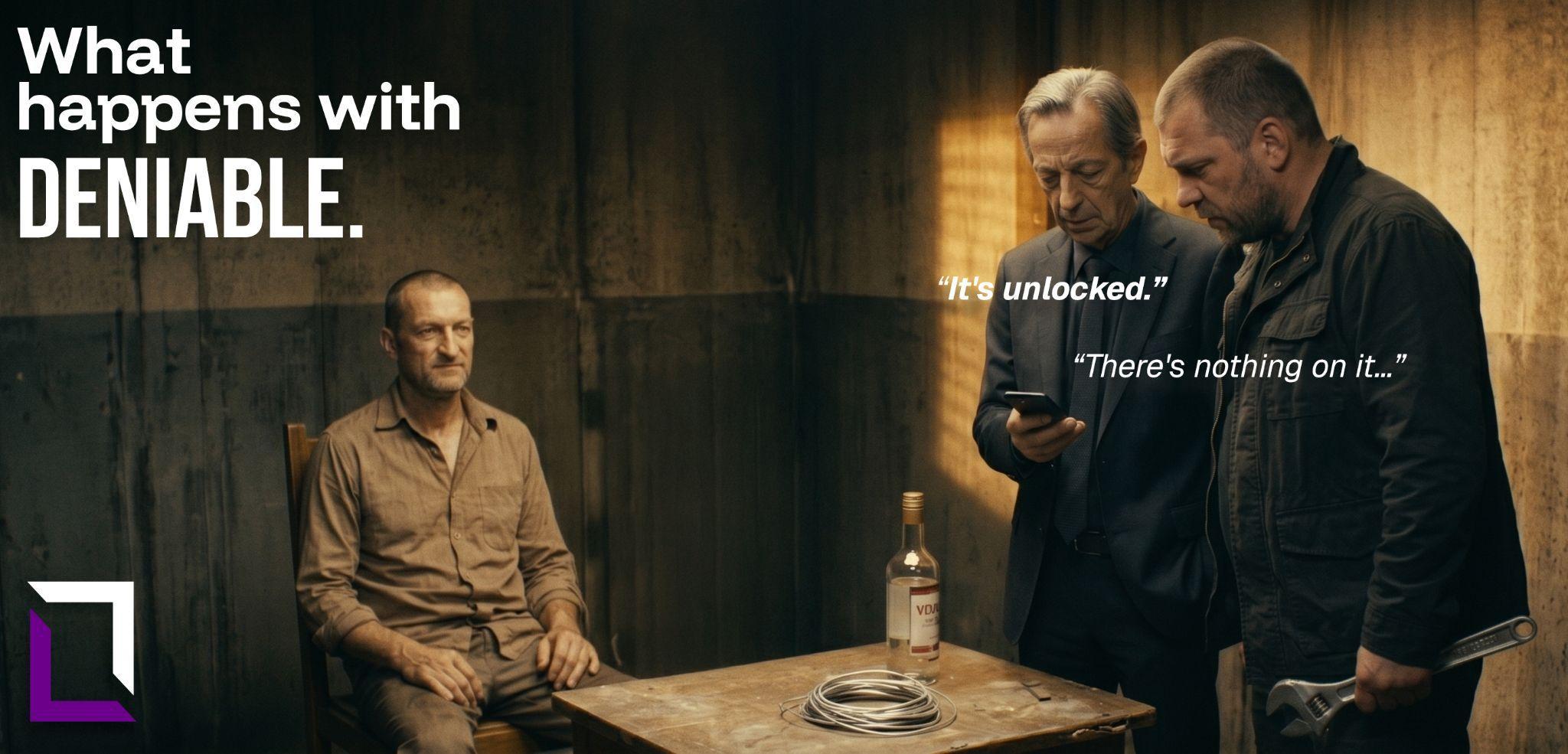
They came for the person, not the wallet
The smart attacker skips the cryptography and goes straight for you; here is why a hardware wallet does not cover a $5 wrench attack, and what does.
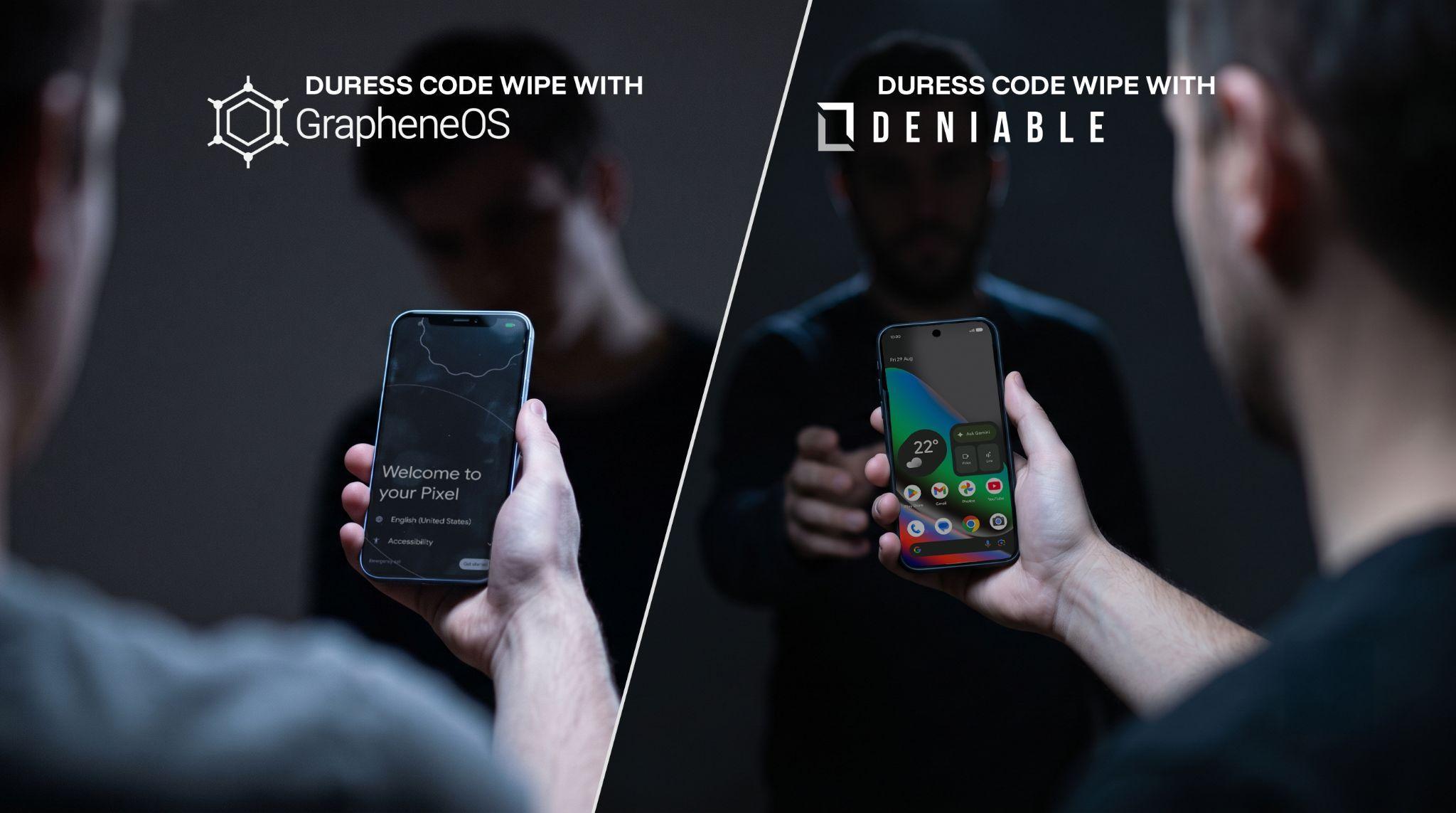
GrapheneOS vs DeniableOS: which one survives a forced unlock?
GrapheneOS is the best hardening base and DeniableOS is built on it; at the forced-unlock moment a duress wipe proves you hid something while a deniable unlock proves nothing.